How Calm Does a Black Woman Have to Be to Avoid Being Labelled Aggressive?
Exploring racialised perceptions, invisible emotional labour and the importance of accountability.
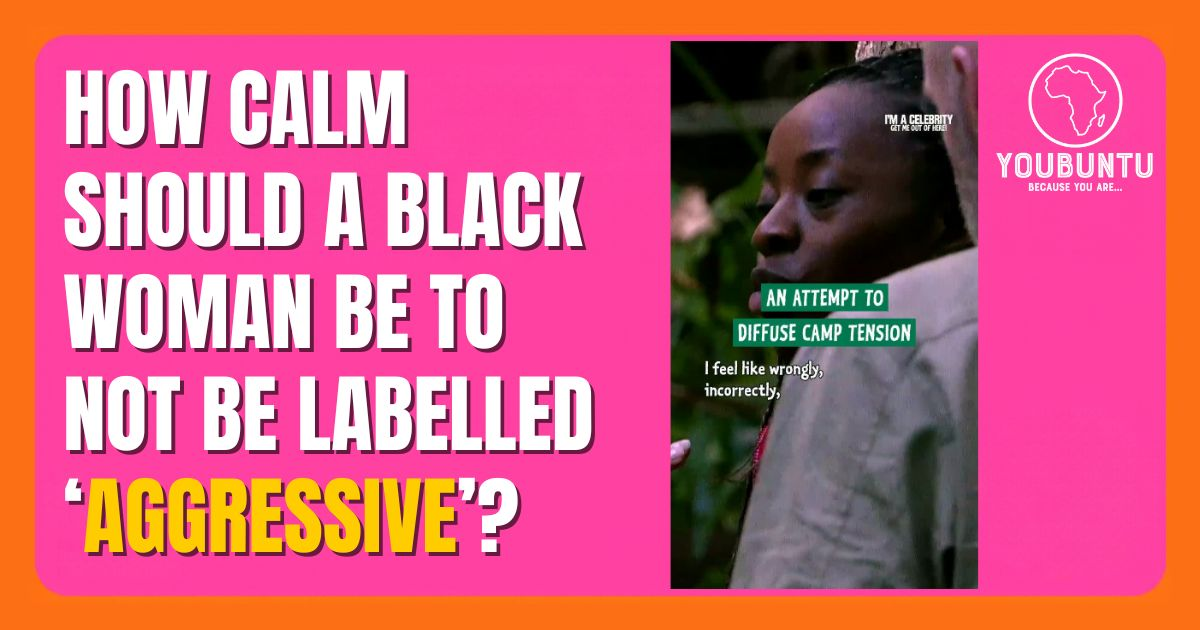
I wonder how many Black women watched this interaction on I'm a Celebrity… Get Me Out of Here! and immediately recognised something they have experienced themselves.
Whilst the use of the word 'aggressive' has understandably become a focal point of this conversation, there is so much more happening within this interaction that deserves our attention.
The invisible emotional labour
Before we even address the use of the word 'aggressive', let's pay attention to what was happening beforehand.
Notice how AJ smiles whilst speaking. Notice how carefully she manages her tone, how calmly she explains herself and how she attempts to reason and de-escalate the situation.
For many Black women, this is an all-too-familiar experience.
There is an additional layer of emotional labour that often goes unnoticed. The conscious effort to soften our delivery, monitor our facial expressions, regulate our emotions and carefully choose our words, because we know how easily our behaviour can be misinterpreted.
We consider not only what we want to say, but how we might be perceived for saying it.
Are we smiling enough? Is our tone soft enough? Are we being too direct? Will expressing our frustration be interpreted as hostility?
Imagine having to manage other people's potential perceptions of you before you've even finished expressing yourself.
It's exhausting having to police our own behaviour in anticipation of how others might police it.
And all of this takes place within conversations where we are supposedly participating as equals.
The 'angry Black woman' stereotype
The 'angry Black woman' stereotype is deeply embedded within our society. It can influence how Black women are perceived when they express frustration, communicate directly, establish boundaries or simply disagree.
What is considered confidence, assertiveness or strong leadership in one person can be interpreted as aggression, hostility or intimidation in another.
Of course, Black women can be aggressive, just like anybody else. But we should also be afforded the same freedom to express ourselves, disagree, challenge unfair treatment and experience frustration without being disproportionately labelled as such.
We shouldn't have to demonstrate exceptional levels of patience, composure and emotional restraint simply to be afforded the same consideration as everyone else.
This is where racial literacy becomes so important.
Recognising racial bias isn't always about identifying overt acts of racism. Sometimes, it's about examining the different standards against which we measure people's behaviour.
When tears change the narrative
This interaction also highlights something else: the power of tears to shift the dynamics of a conversation.
Whether intentional or not, when the person whose behaviour has caused harm becomes visibly upset, the attention can quickly shift towards comforting them.
Their emotional discomfort takes precedence, the original issue becomes secondary, and the person who experienced the harm is now expected to provide reassurance.
This is sometimes referred to as the weaponisation of tears.
That doesn't necessarily mean the tears are manufactured or that the distress isn't genuine. The issue is what happens as a consequence.
Accountability can become overshadowed by sympathy. The conversation moves away from addressing the original behaviour and towards managing the emotional response of the person being challenged.
Suddenly, the Black woman finds herself managing not only her own emotions but those of the person who has caused her distress.
And, somewhat ironically, she risks being perceived as the aggressor simply because someone else is now upset.
Someone's discomfort at being challenged should not automatically take precedence over the harm experienced by the person challenging them.
Both people's emotions can be valid, but one person's distress should not erase the other's experience.
When an apology falls short
And then comes the apology.
What I found particularly disappointing was that, despite AJ clearly explaining the significance of being labelled aggressive, the description was not withdrawn. Instead, it was reaffirmed.
For me, this undermined the sincerity of the apology.
How meaningful is an apology if we remain unwilling to reflect on the very behaviour or judgement that caused the harm?
There is a difference between regretting that someone is upset and recognising that we may have treated them unfairly.
An apology should provide an opportunity for reflection, understanding and, where necessary, a change in behaviour. It shouldn't simply be a means of bringing an uncomfortable conversation to an end.
We cannot always expect people to immediately understand the racial significance of their words. However, when someone takes the time to explain that significance, we have a responsibility to listen, consider their perspective and examine our own.
What can we learn from this?
This isn't about declaring someone a racist, nor is it about suggesting that every disagreement involving a Black woman is racially motivated.
It's about recognising racialised perceptions, unconscious bias, tone policing and the unequal expectations placed upon people in everyday interactions.
We should all be willing to ask ourselves:
What specifically was aggressive about the behaviour I witnessed?
Would I interpret that same behaviour differently if it came from someone else?
Am I responding to someone's actual behaviour or my perception of them?
Whose emotions are being prioritised, and whose are being overlooked?
When someone explains the racial significance of my words, am I willing to listen and reflect?
Am I prepared to challenge my own perceptions, even when doing so makes me uncomfortable?
These questions are relevant far beyond a television programme. They are relevant in our classrooms, workplaces, staff meetings, professional relationships and everyday conversations.
Black women should not have to make themselves smaller, quieter, softer or more accommodating simply to be heard without prejudice.
Racial literacy is about learning to recognise what we may previously have failed to notice. Anti-racism is about what we choose to do once we recognise it.
So, what did you notice when watching this interaction? And, perhaps more importantly, what might you notice differently the next time you witness a similar situation?
Continuing the conversation with YOUbuntu
At YOUbuntu, we create safe and educated spaces to explore challenging conversations surrounding race, identity, unconscious bias and inclusion.
Through workshops, staff training and guided discussions, we help individuals and organisations develop the racial literacy needed to recognise, understand and challenge racial inequalities in everyday life.
Because meaningful change begins with our willingness to learn, reflect and question what we think we already know.